SOCIAL NETWORKING APP
We group

Introduction
Herve’s Story
Herve reached out to me intending to create an app to help facilitate the forming of online communities by Cameroonians living in Canada (and eventually globally). Such communities have a system for raising capital, called Tontine, wherein individuals pay into a common pool of money, which is then loaned out (and paid back) each month.
Herve found it a challenge to form those communities when living away from his home country. In addition, this niche group experience difficulties in finding online services tailored to their specific cultural needs. Many of them have to manually use multiple online tools to achieve their goals.
Date
August - December 2018
Role
UX Research
UX/UI Design
Branding
Team
Web Development





Design Journey
Process
01.
Discover

The main target audience was members of the Cameroonian communities, within Canada, interested in participating in Tontine.
I conducted primary research by interviewing 5 potential users to identify their frustrations, needs, and motivations to help build user personas. Initially, I thought a one size fits all approach design would suffice but through the user interviews I identified two main users:
1) Admins: Responsible for the creation, management, and coordination of their groups
2) Members: Active participants that are searching for groups to belong to with members of shared cultural experiences
I also conducted secondary research through market research analysis to identify other social networking apps their market positioning to help shape the app solution and identify points of differentiation.

02.
Define
User insights
Think and Feel
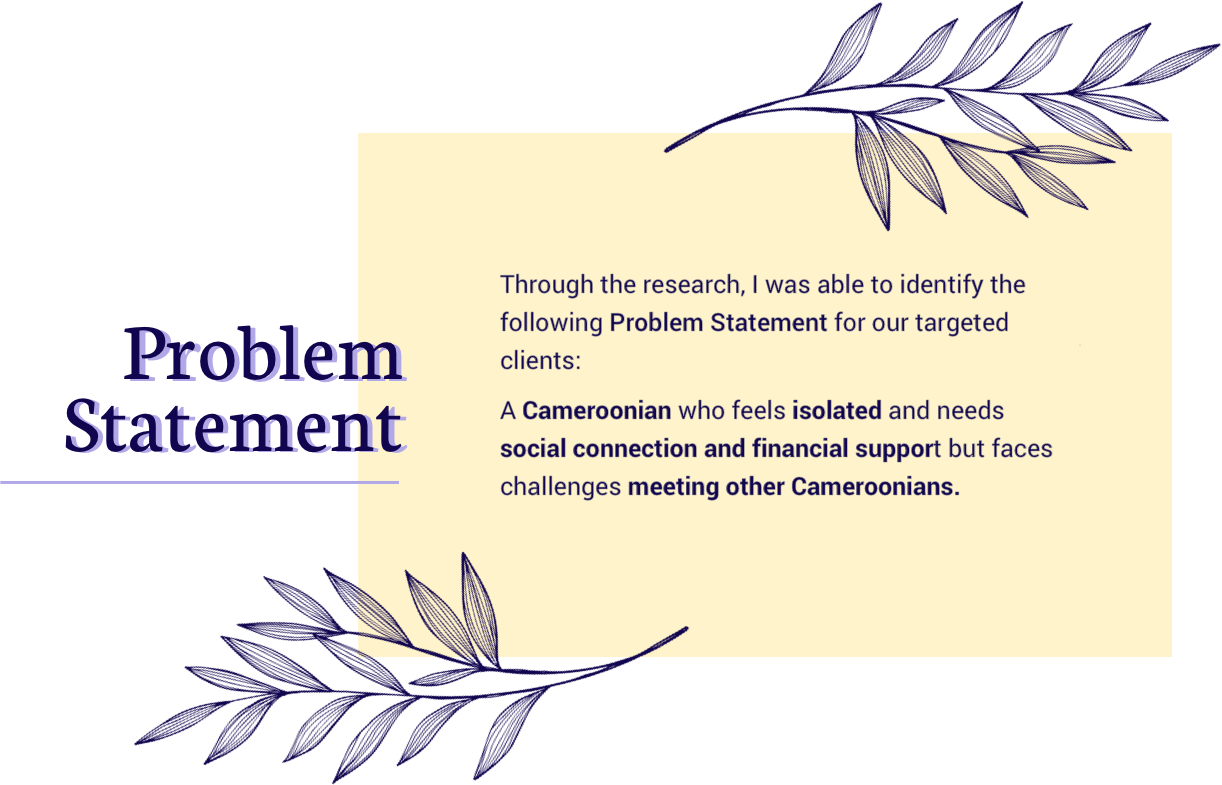
Two distinct user groups that were also identified were Cameroonians that are newcomers to Canada and those that have already been established. Both groups would like to form a deeper connection to their home country.
Pain and Gain
They are both frustrated by the difficulty in meeting other Cameroonians easily and the lack of an online network of Cameroonians. They are both highly motivated groups that are tech-savvy and willing to establish online communities.
Competitor insights
Challenges
The main competitors are other social media apps, primarily those that allow the facilitation of offline meetings. These apps include Slack, Meetups, and Facebook and have great brand awareness and audience reach.
Opportunities
These apps are not tailored to support both the creation of groups and offline meetings and a payment system to support the Cameroonian tradition of financing known as Tontine.



03.
Develop
Ideating solutions
In order to differentiate the app from competitors, the features had to provide both the ability for the users to form and manage online groups while also providing a way to contribute to an online payment fund. Due to the scope of setting up a payment infrastructure, the first iteration of the app would solely focus on the creation of online communities.
User Flows
The main user flow of the app centers on the pain points of users. The user flow below is the process for admin users, who are able to create organizations, accept, chat, and manage contacts, schedule events, upload documents, and adjust account settings. They have full control of the features of the apps and can manage multiple groups.


Visual Identity
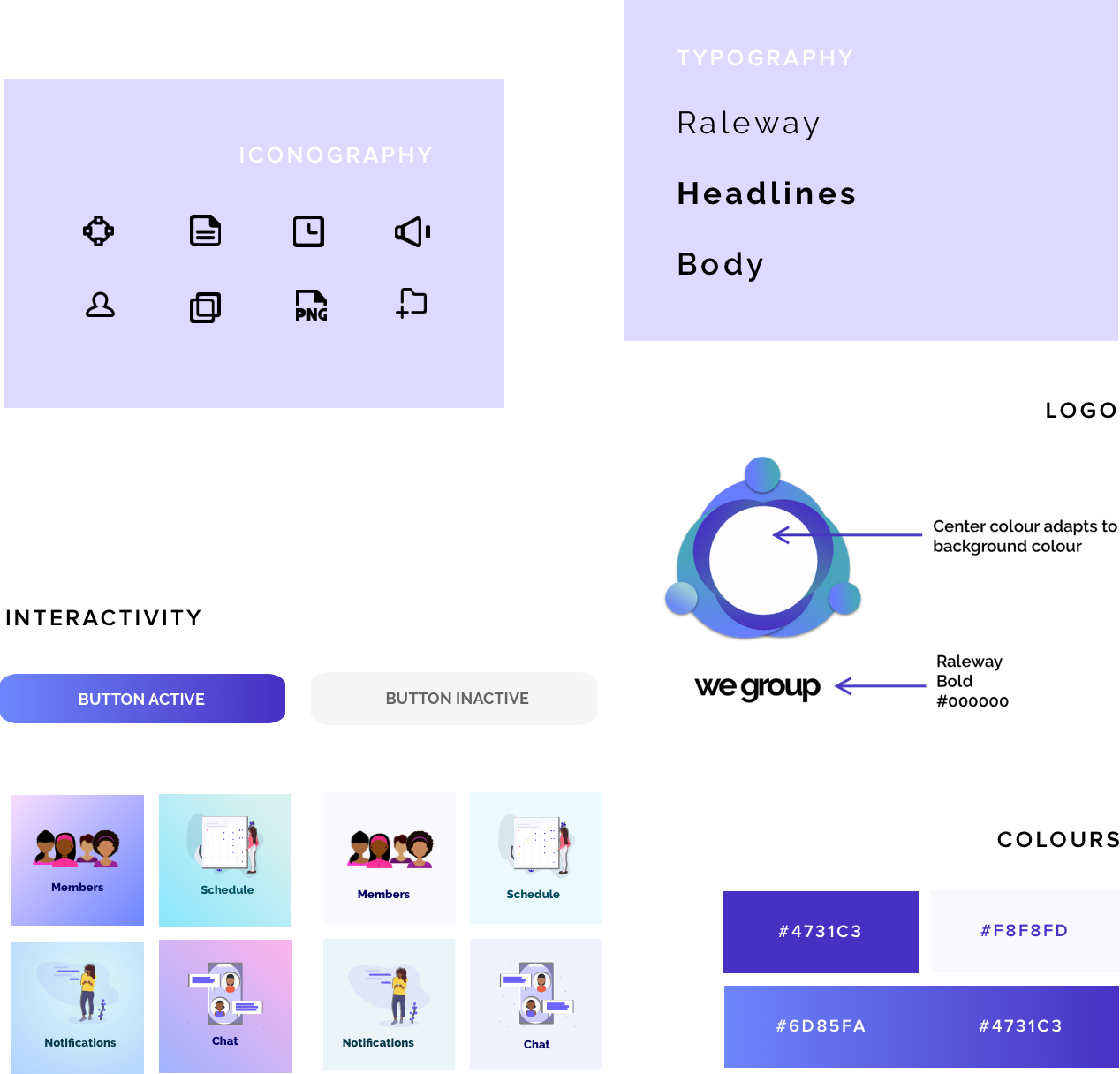
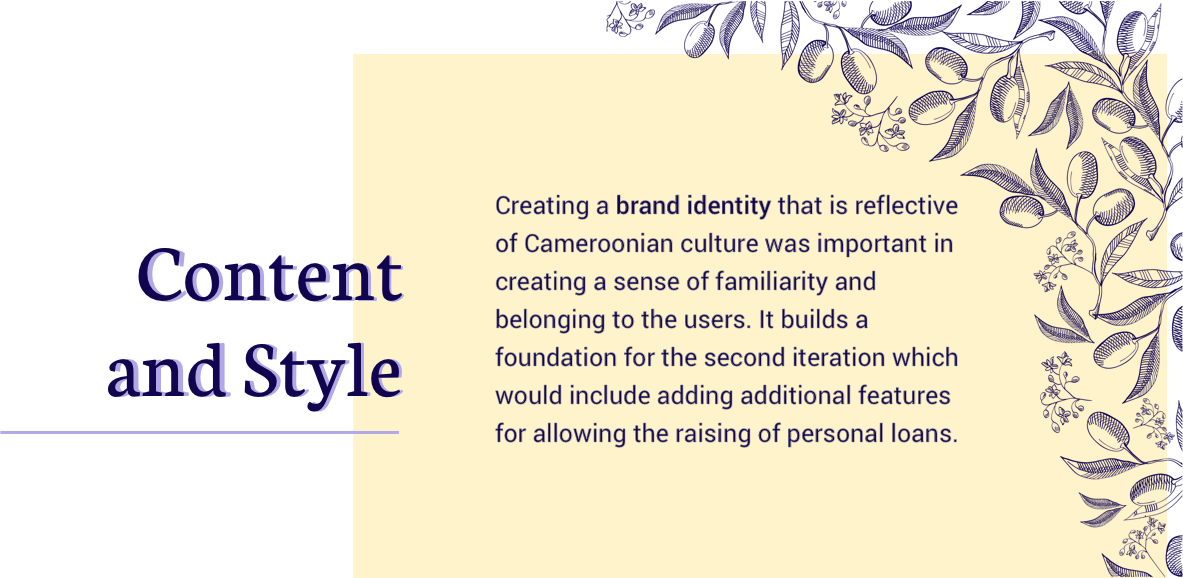
When choosing design elements, I tried to ensure a delicate balance between Cameroonian culture and visuals of human connectedness that is experienced in all cultures.
The cool-toned and analogous colour scheme aims to elicit a sense of calm and harmony that is often experienced when engaging in social settings with close friends. The circular logo was inspired by the ancient practice of gathering around a campfire. To this day, humans connect around the warmth of a night fire, sharing stories, meals, and customs.

Prototyping
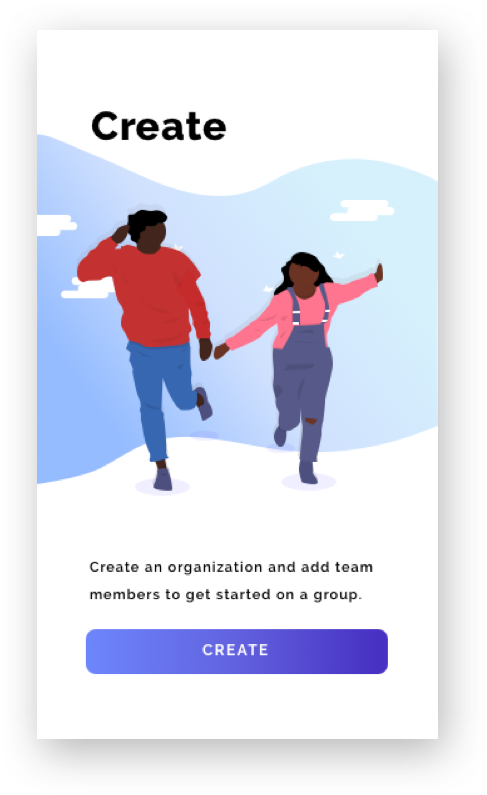
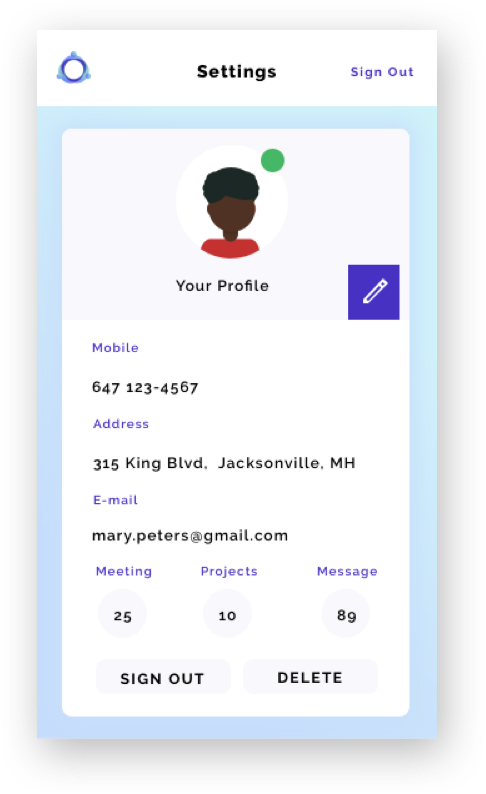
Following the lo-fi wireframes, the emphasis on this iteration was making it easy for first-time users, particularly those that will be admins, to create and manage groups. I aimed to make the process as intuitive and familiar as possible by using standard user interface elements (input controls, navigational components, and informational components). These elements were then customized by the standards set out in the style guide.
04.
Deliver
Iterating
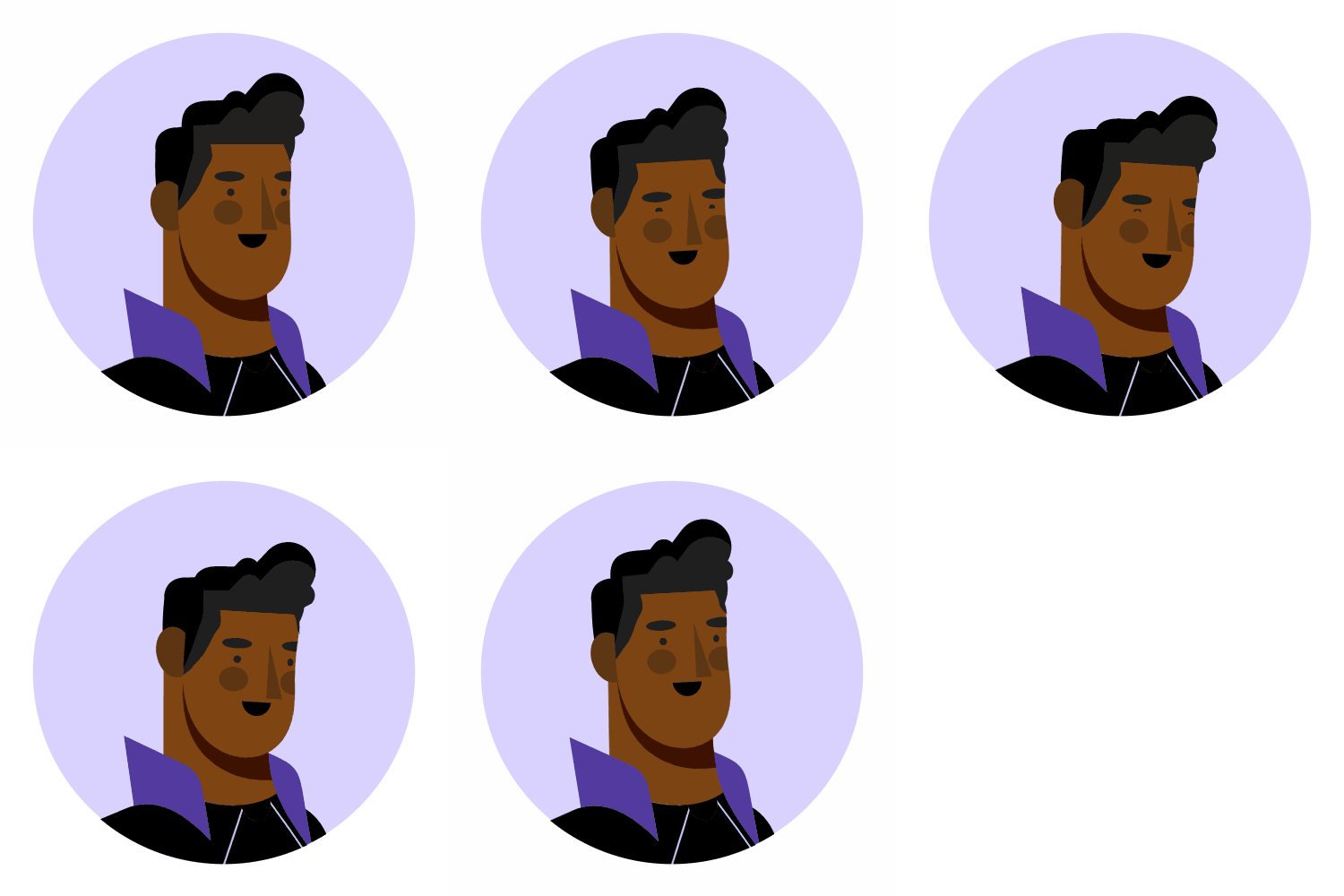
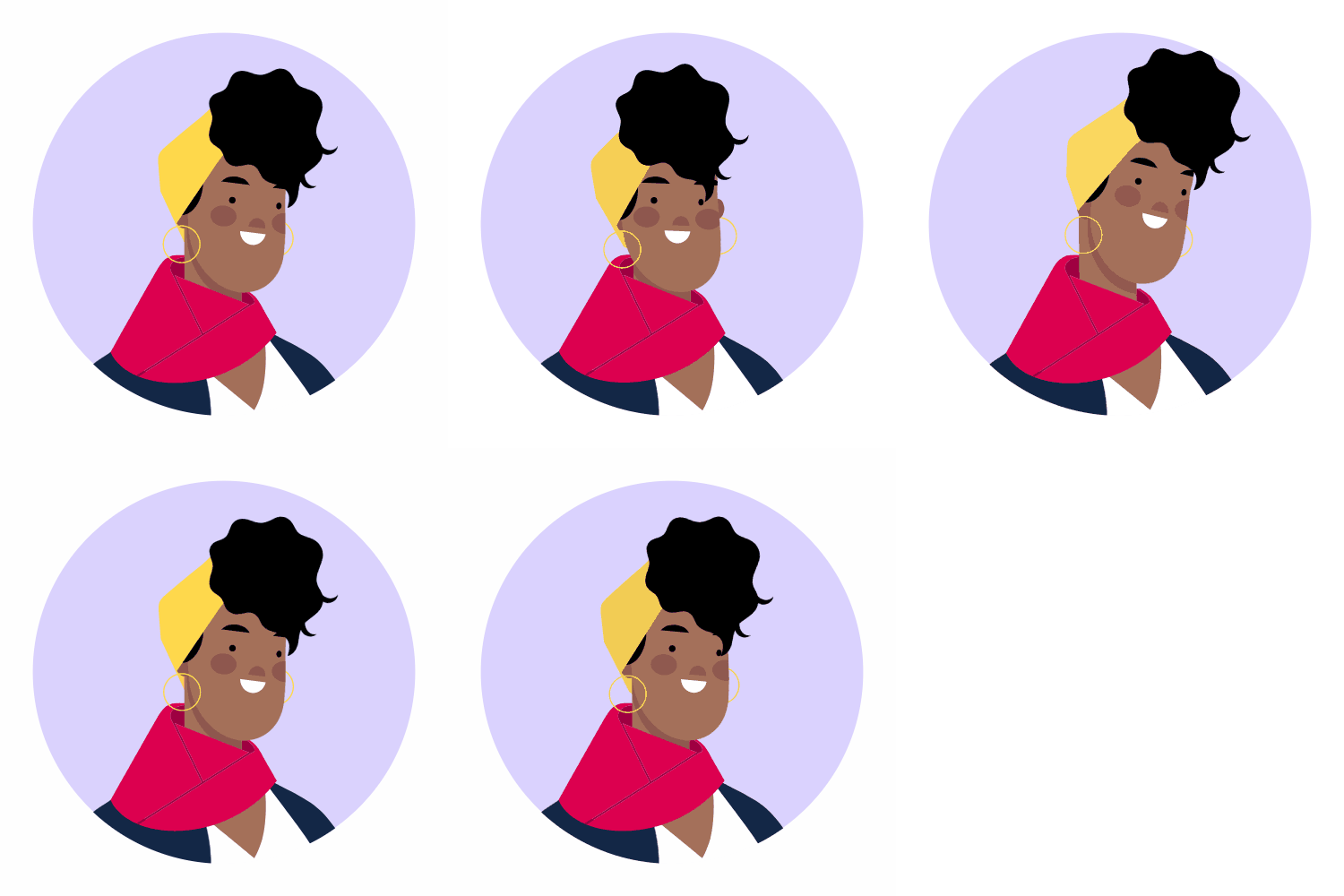
I tested the initial prototypes with 5 potential clients and the biggest feedback that I received was the lack of diversity in the illustrations. This was an oversight on my part and highlighted biases when choosing imagery. It also revealed the challenge of finding diverse vectors that reflect different cultures.

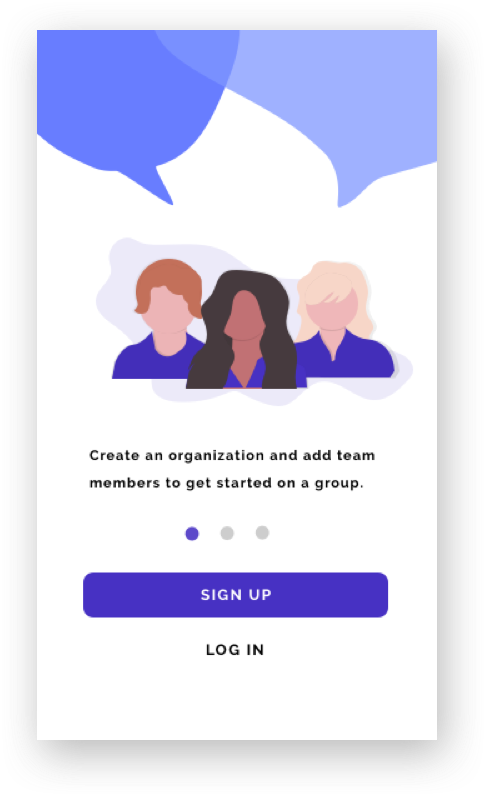
Before
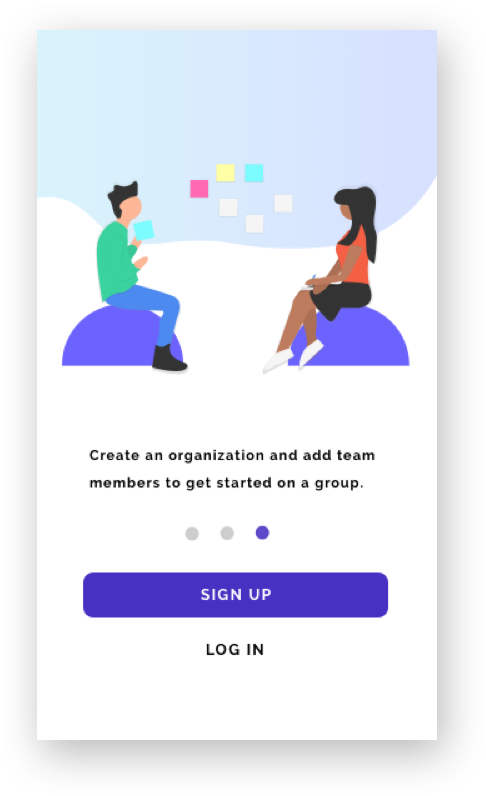
Before
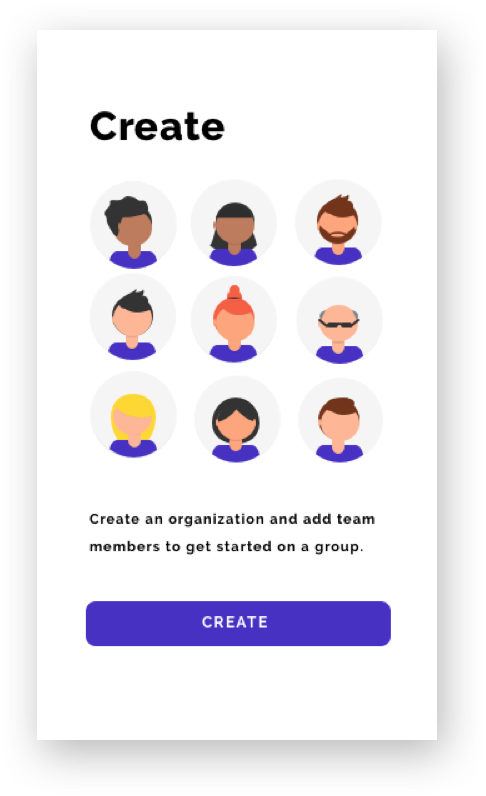
Before
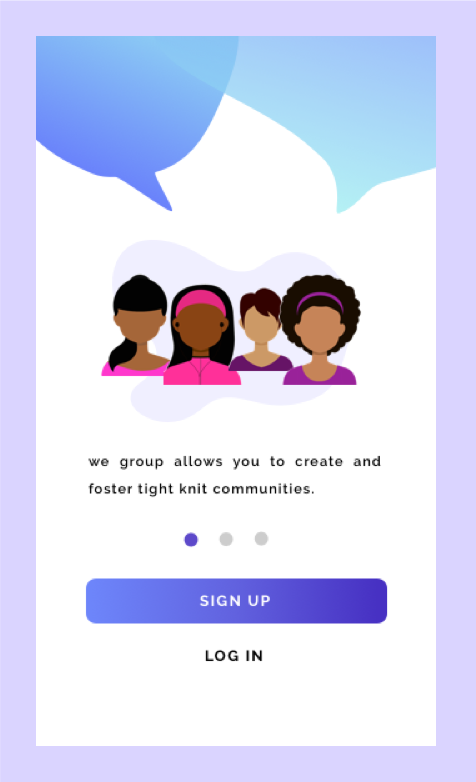
After
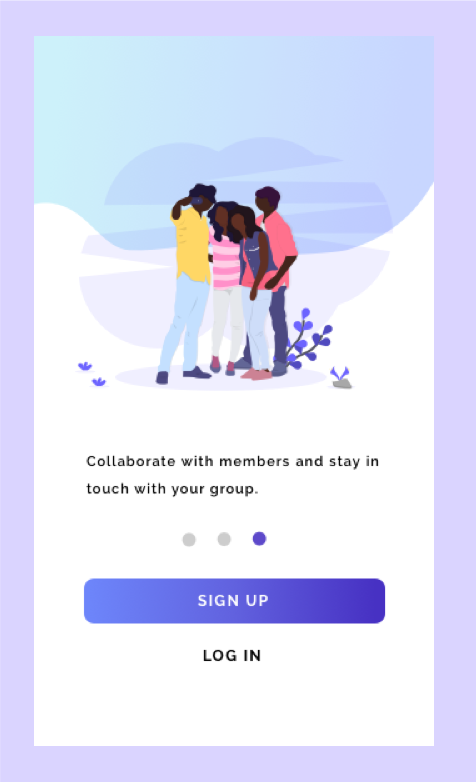
After
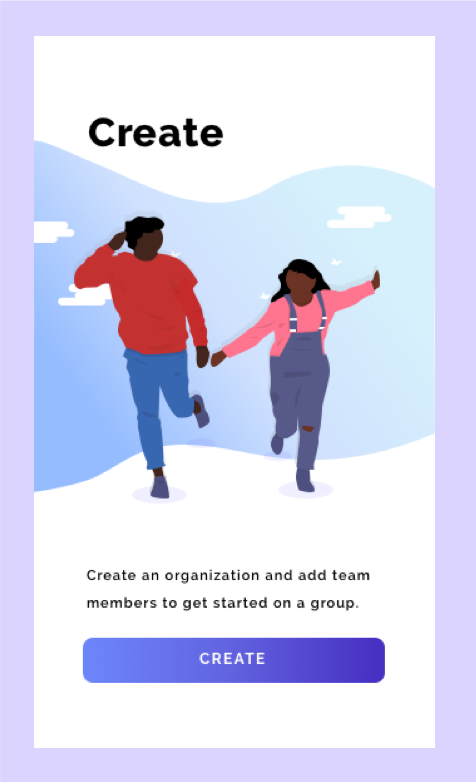
After

Learnings
Design Sprints
Due to this project's complexity, I set goals for each week and established a timeline for the processes and deliverables. I also iterated the concepts and gathered feedback weekly to ensure I was aligned with my client’s goals.
Cultural Immersion
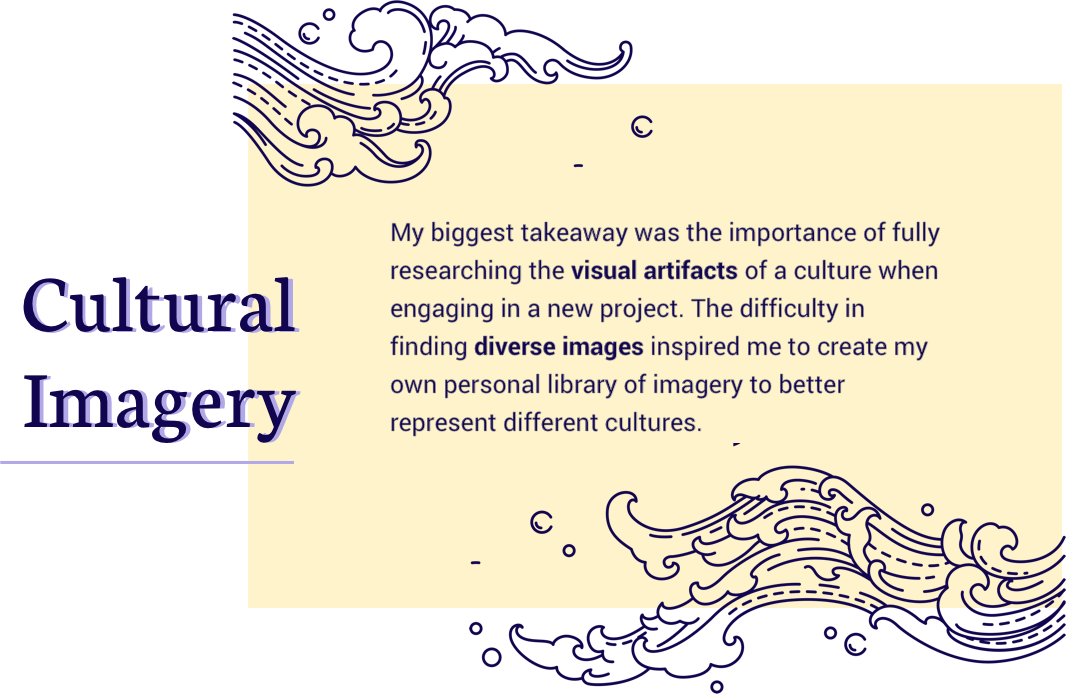
I found it challenging to find online sources as visual inspiration when designing for users in the Cameroonian community. It was new territory for me and I was physically distanced from the nation so real-world examples were hard to come by. I also aimed to check my own biases by constantly getting feedback from my clients to ensure I was being culturally sensitive and representative.
Scroll down to view next project