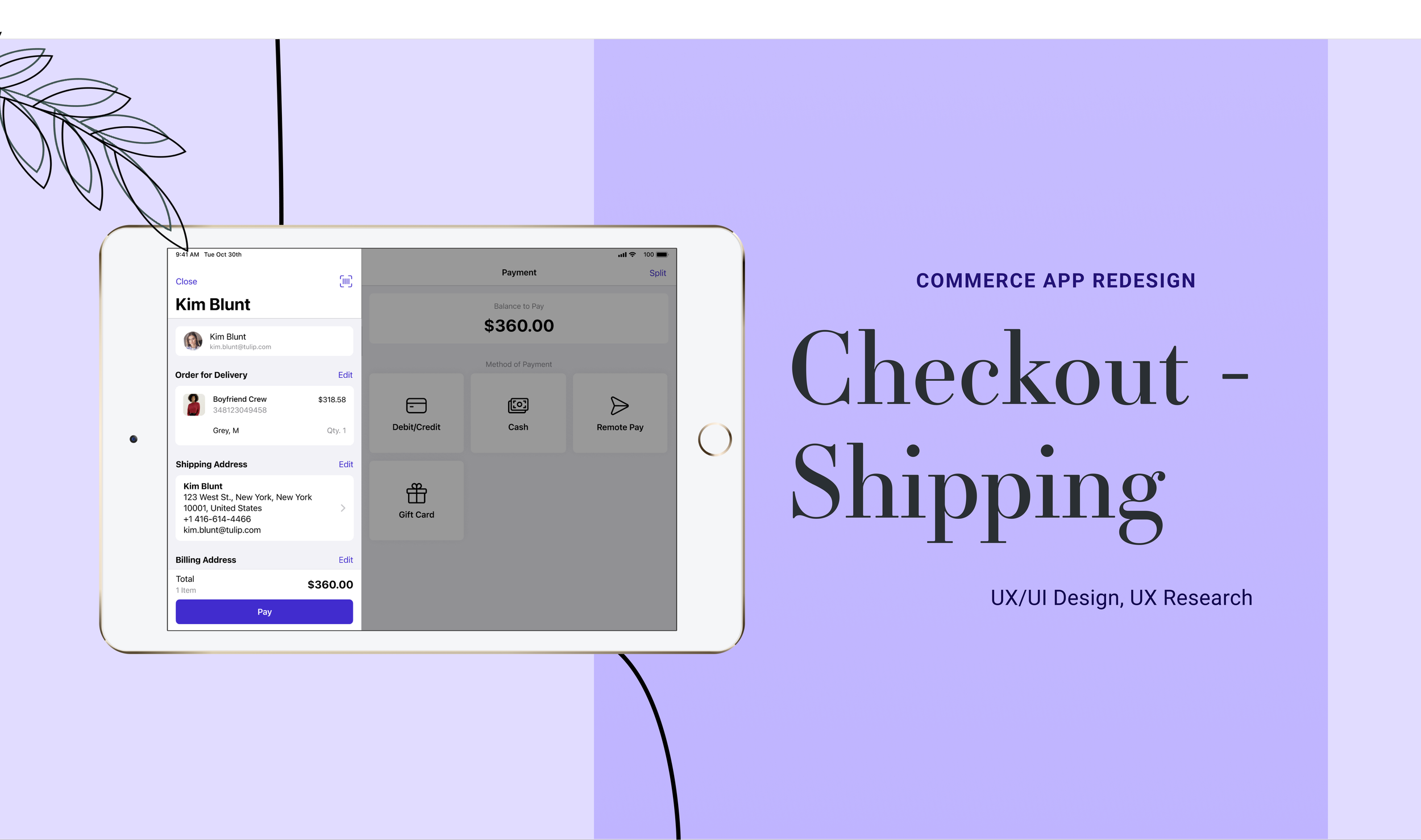
Turning returns into opportunities to save the sale
Redesigning the returns and exchanges experience within Tulip's Point of Sale to simplify transactions, reduce friction for store associates and help retailers retain revenue when customers exchange previously purchased items.
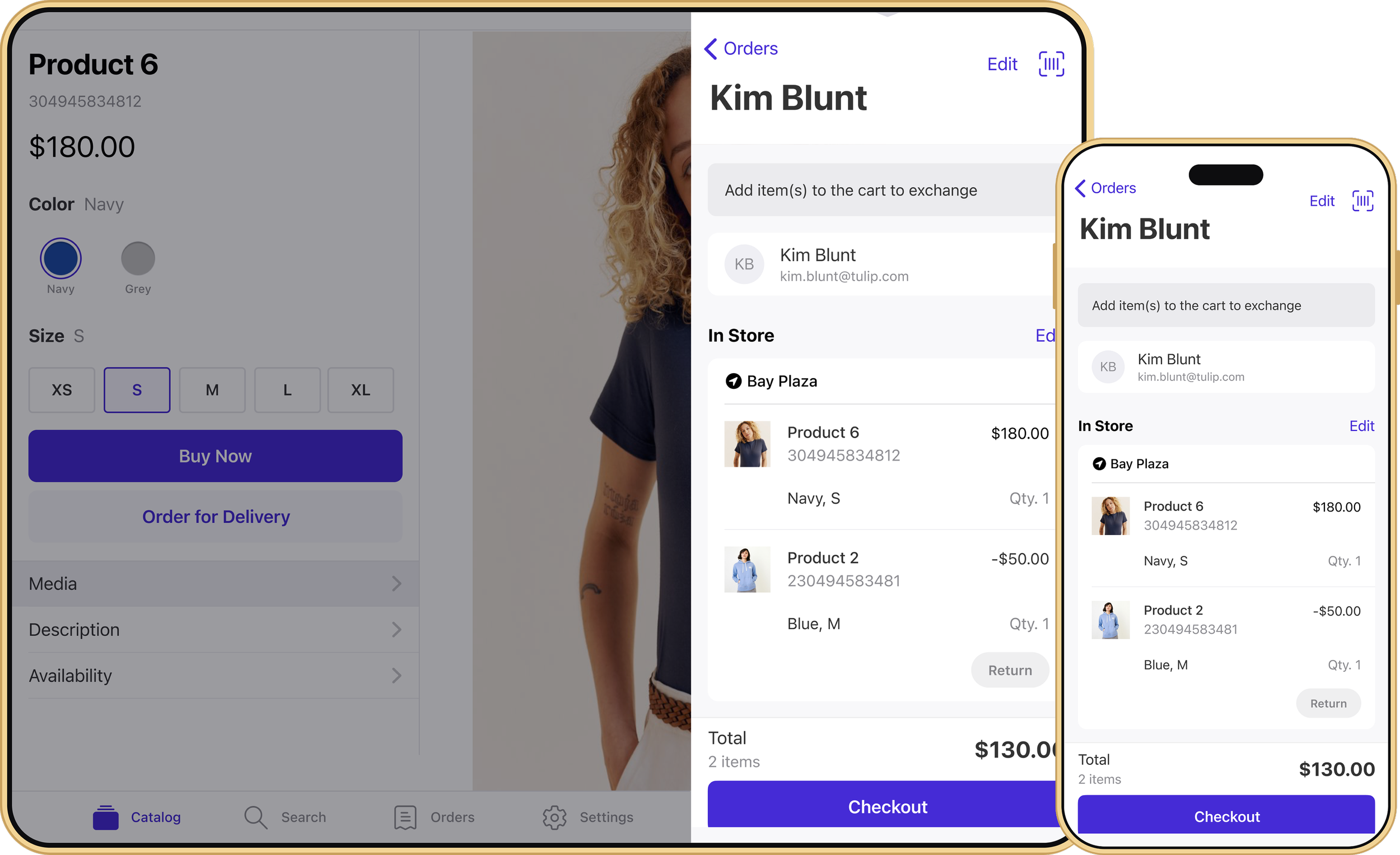

The new experience combines returns and exchanges into a single, streamlined checkout flow. Associates can add replacement products alongside returned items in the same cart, eliminating separate transactions and helping retailers save the sale.
ROLE
Lead Product Design
PLATFORM
iOS
CLIENTS
Chanel
Coach
Michael Kors
Purolator
Revolve
SSENSE
TEAM
6 Developers
1 Product Manager
1 QA Engineer
THE CHALLENGE
A Fragmented Retail Experience
Tulip’s POS didn’t have an exchange feature, a common functionality in POS systems. Store associates had to process a refund for the original purchase before creating an entirely new transaction for the replacement item.
For customers, this meant receiving a refund and making a separate payment, even when they simply wanted to exchange one product for another. For retailers, the disconnected experience created unnecessary friction during an important opportunity to retain a sale.
The challenge was to bring returns and purchases into a single, intuitive transaction while accounting for the complexity of different payment methods, order histories, and retail policies.
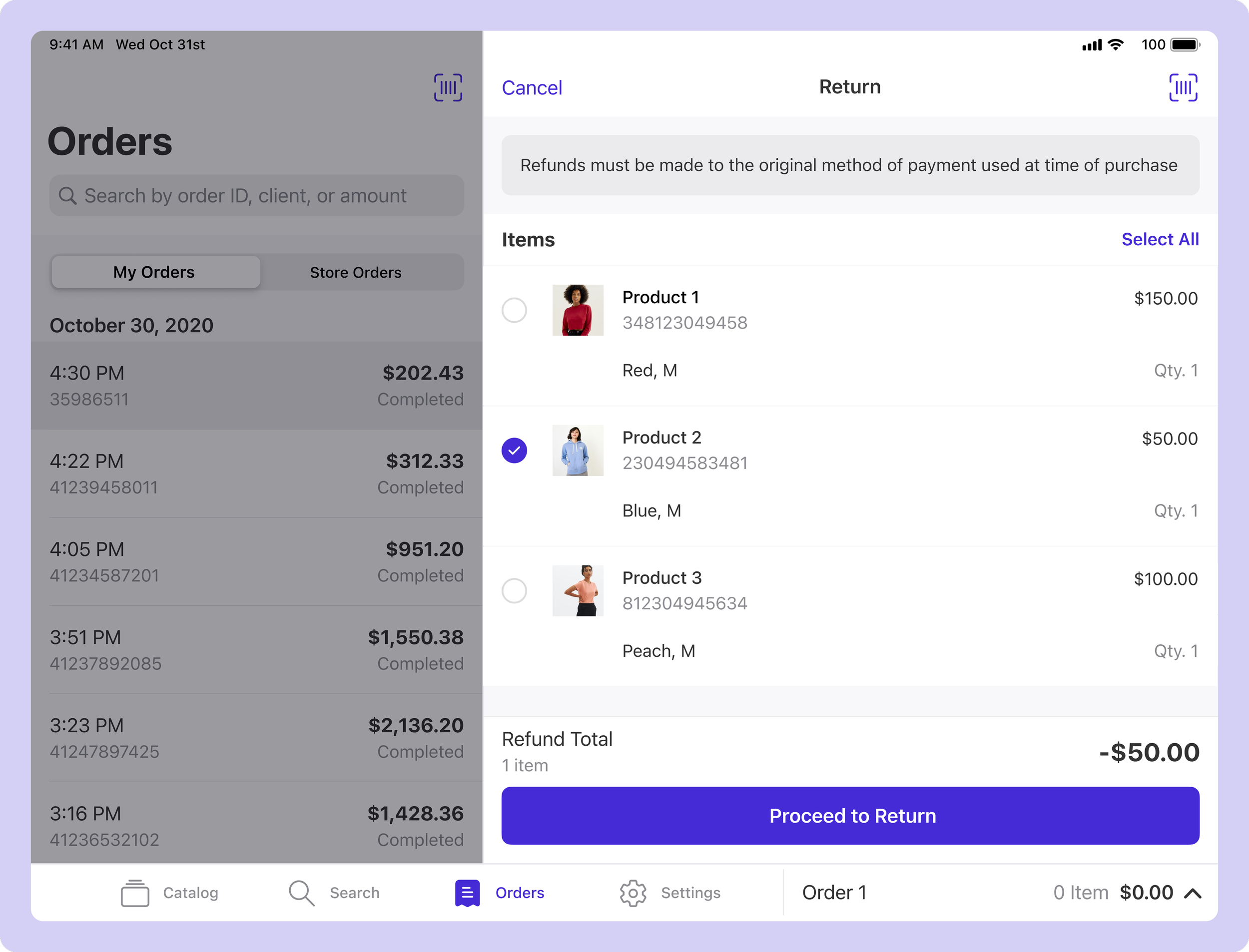
The redesigned returns flow incorporates exchanges, streamlining both processes for store associates. The flow handles the complexities of outstanding balances, partial refunds, even exchanges, and split-payment refunds. Linked order histories make it easy to track exchanges across multiple transactions, even when items from the same purchase are exchanged at different times.
SOLUTION
Bringing Everything into One Cart
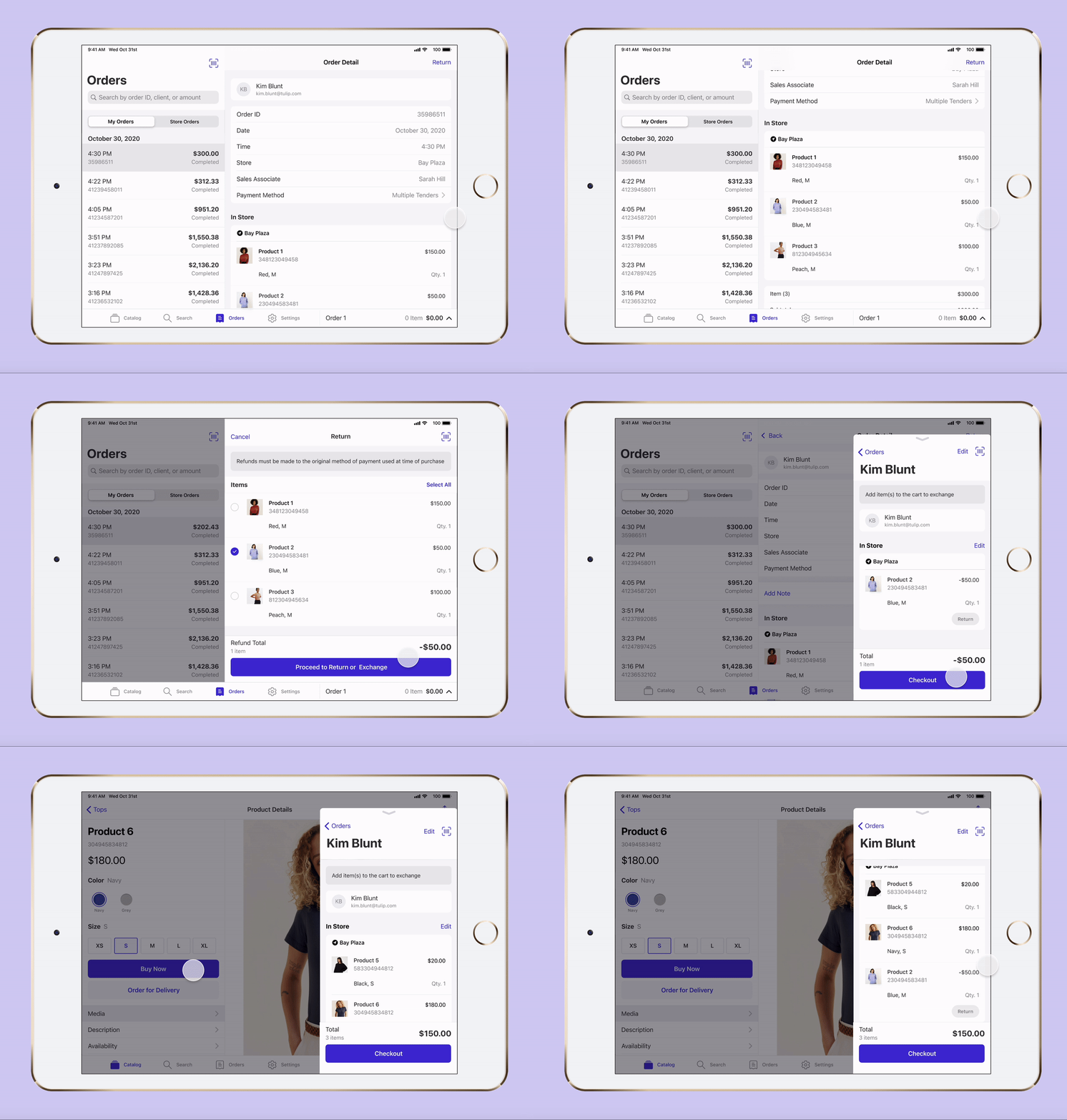
To build on associates’ existing mental models, exchanges were incorporated into the existing returns flow.
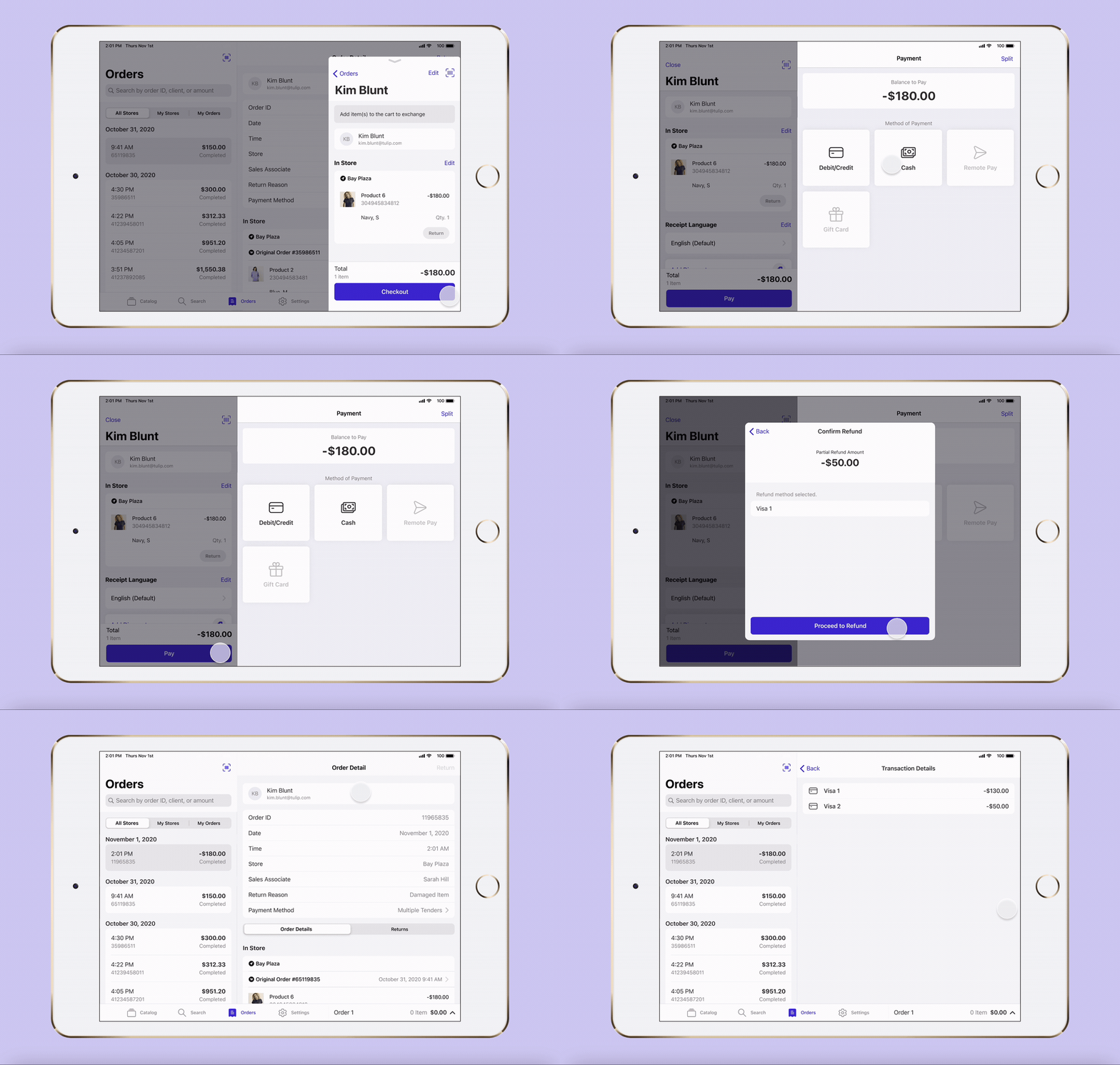
Previously, associates had to complete a refund before beginning a new sale. The proposed experience instead brings returned items into the cart, where replacement products can be added alongside them with the net order total reflecting the difference.
SOLUTION
Building on a Familiar Workflow
The redesigned payment experience adapts to the outcome of each exchange.
When the replacement costs more, shoppers pay only the remaining balance. When it costs less, the difference is refunded to the original payment method. For exchanges with no outstanding balance, a dedicated Complete Sale action allows associates to finish the transaction without processing an unnecessary payment.
By accounting for each scenario within the same workflow, the experience provides a clearer path to completing an exchange.
SOLUTION
Simplifying Complex Exchange Histories
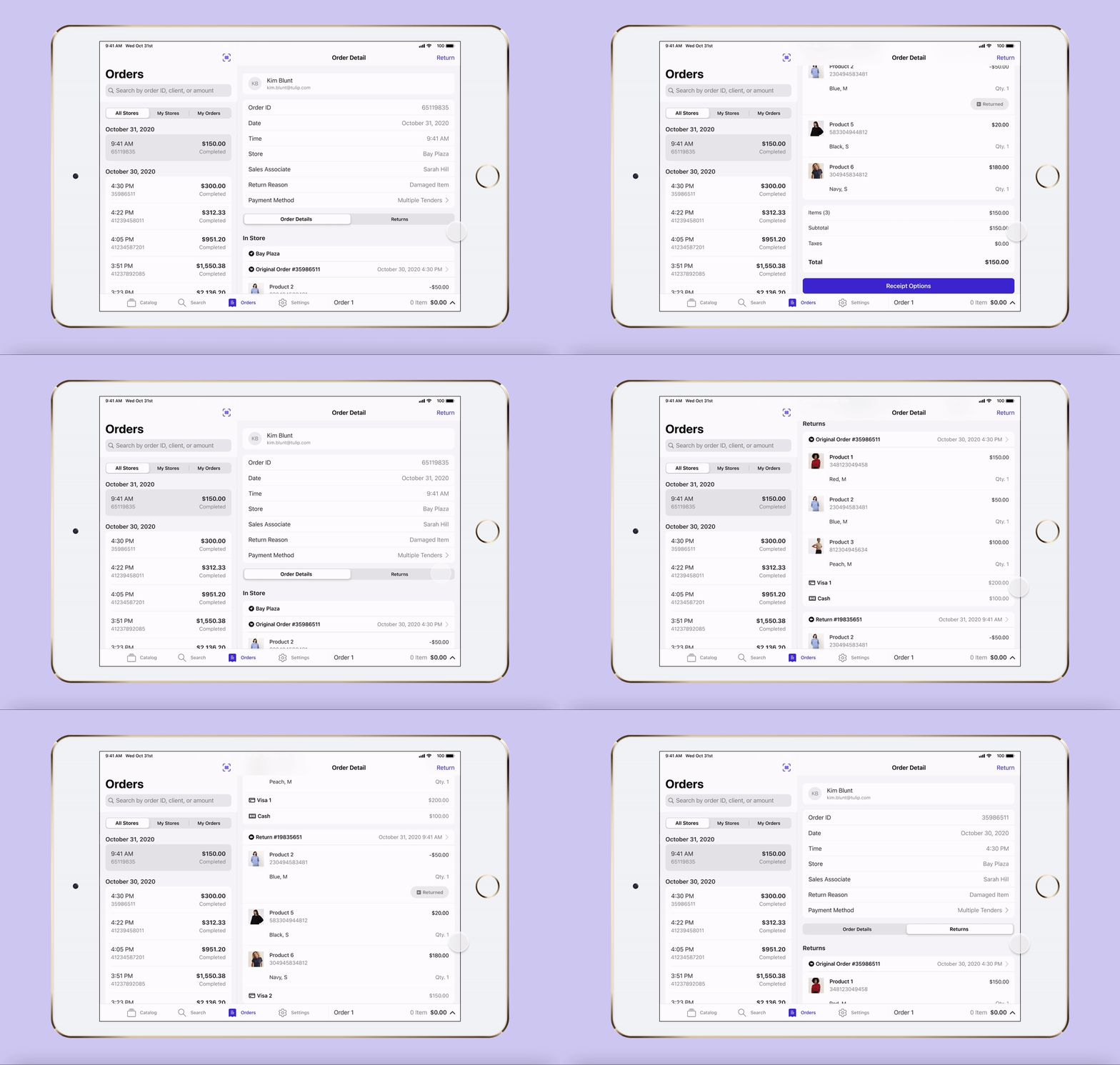
Tracking exchanges becomes more complex when items from the same order are exchanged at different times, creating a chain of linked transactions. Each replacement must be traced back to its original purchase, including any subsequent exchanges or returns.
I simplified how this information was presented by organizing order histories and item-level details into a clear, intuitive interface.
This helps busy store associates quickly identify exchanged products, determine which items are eligible for return, and understand the relationships between transactions.
Future
Bring Technical Dependencies in Sooner
Checkout touched several established areas of the product. Mapping those dependencies earlier would make it easier to distinguish interaction improvements from changes requiring deeper architectural work.
Accommodating Retailer Configurations
Future iterations could introduce configurable exchange rules to accommodate different return windows, final-sale restrictions, receipt requirements, and refund policies.
Scroll down to view next project